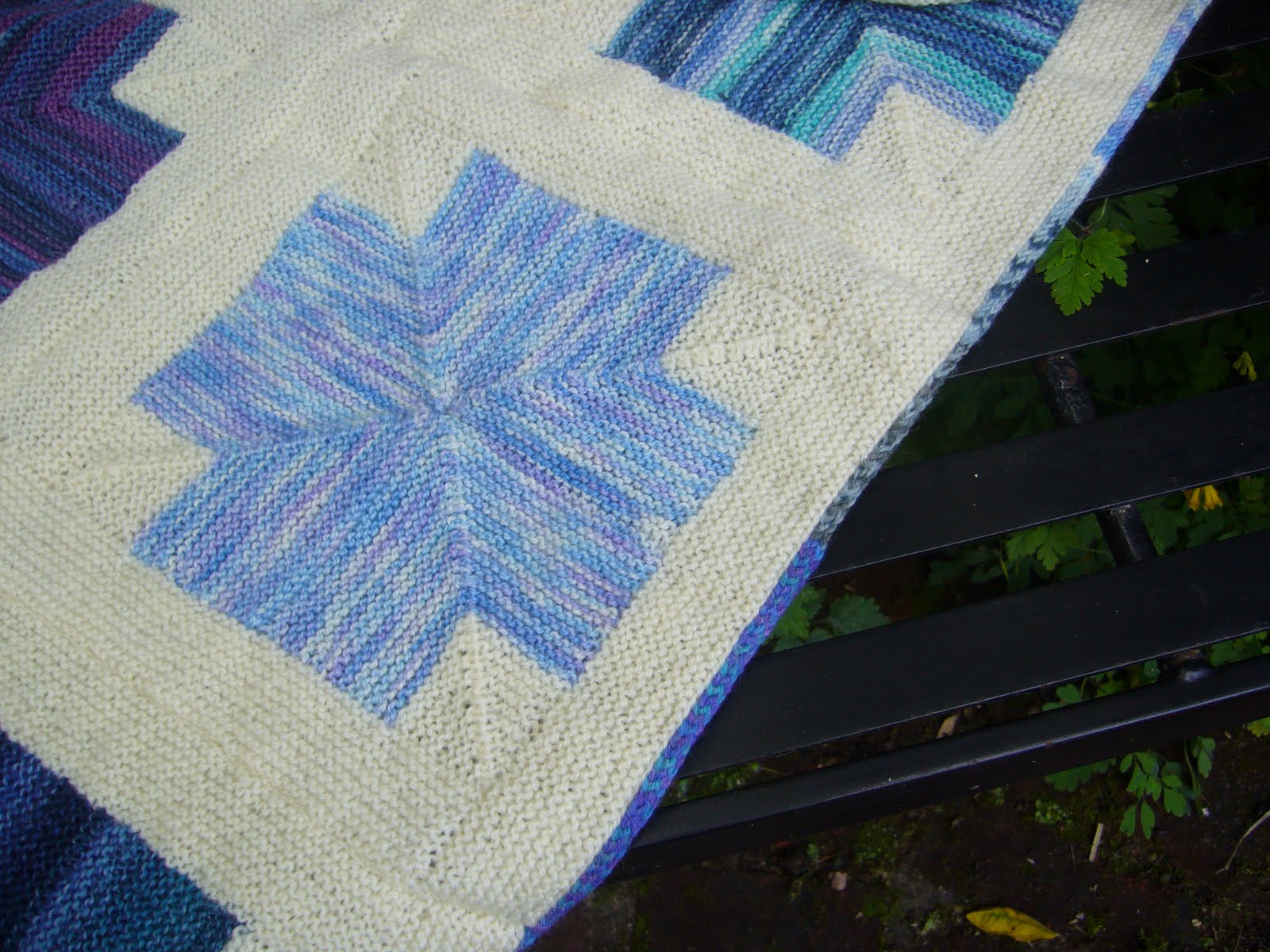
Wednesday, September 21, 2011

Harvests


The potato harvest was quite exceptional this year - and whoever thought one would write such a sentence?  Here, the two largest with a standard apple for comparison.  One of these weighs nearly two pounds, and is much more than we would need at one meal.


An enormous beetroot, grown by Angelo, our Italian neighbour on the allotments, who has green fingers.  This one is even now being rendered down into soup - beetroot and ginger, eaten with the addition of some crumbly white cheese.


Courgette soup, made simply with the addition of a potato and onion and blended.  Even the largest of the courgettes can be turned into this.  It needs lots of black pepper but is a lovely creamy soup.


Finally, that rare thing: a new taste.  This is sorrel soup, using sorrel grown from seed on our plot.  It has a distinctly sharp taste, lemony, but not actually lemon.  I had never tasted it before, but it is delicious.


Last Sunday, I whiled away the afternoon picking out debris from a raw Norfolk Horn fleece, in preparation for spinning.  It is to be handwoven and will end up on display in this spectacular medieval barn in Coggeshall.  The barn was the grange for the Cistercian monastery and the fleece is to be turned into a replica habit - Cistercians wore white habits.


Finally, two very fine farm carts from the National Trust collection, now housed in the barn.  I was prompted to reread Adam Thorpe's book "Ulverton", in which, inter alia, he mourns the passing of the farm cart as a symbol of the historic relationship of man to the land he farmed.

Wednesday, August 31, 2011

Finished Objects


First, my husband's latest production: this unusual mirror for our living-room.  Many years ago we saw a mirror in a Keswick gallery with small squares of Lakeland slate inset into the frame.  Such a simple idea; we loved it.  Our slate was purchased at the Honister slate quarry, on a day when a howling gale was blowing.  My husband had already bought the mirror and worked up the frame, with its distinctive peg joints in the Art and Crafts style.  It certainly changes the look of the room.


Secondly, the craftsman himself, wearing the brown Shetland jumper which I have finished at last.  It is a very dark brown silvered all over with lighter fibres.  So plain and understated that it looks like an old favourite already and fits like a glove.  It is 4-ply weight, so should be more wearable than some of the heavier jumpers I have made for him in the past.


This last week we took the little train from Bures to Sudbury in order to tackle the first stretch of the Stour Valley walk.  Here, the fascinating litle church at Great Henny.  Like other wooden-steepled Essex churches, it is plagued by woodpeckers which are causing expensive damage.


  At Lamarsh, we were surprised to see that even attempting to open the church door would trigger an alarm, so had to content ouselves by taking photographs of the exterior.


Next, we loaded our bikes into the car and parked at Bures again.  This time we were cycling to Nayland and Stoke by Nayland.  Both of these villages have superb wool churches and a fascinating collection of ancient buildings, many of them called things like"The Old Bakery."  There was little evidence of actual functioning food shops in either. We were struck once more by the convenience of our own village, which has three foodstores, as well as a proper butchers, Post Office and newsagent.

But the churches: Nayland, interior.


A set of panels from an early rood-screen.


Stoke by Nayland, from across the fields.

The fantastic Jesse tree on the door of Stoke by Nayland.


The exterior of the church, showing what an impressive building this is, and also how dark and chill the weather had turned by this point.  We counted ourselves lucky to finish our ride without being soaked.


Friday, August 26, 2011

Under Milk Wood

On our way down to the cottage in Pembrokeshire, we chanced to stop off at Laugharne, a serendipidous visit.  First, a spectacular ruined castle stands over the estuary.  We were amazed to see a heron in residence mid-stream.


A short walk along a promenade brings you to the boathouse, once home to Dylan Thomas, and his wife Caitlin.  Here, the shed used as a study.  The view acoss the estuary must have been endlessly beguiling.


Round at the cottage itself, we enjoyed both Welsh cakes and bara brith, and proper tea in proper cups.  This set the standard for other teas on this holiday, many of which fell sadly short.


I find myself tempted by the idea of another cabled throw, knitted in strips.  The one made for Kate Davies on  Needled is the inspiration.  I have started with the central motif cable from Alice Starmore's St Brigid, which is nowhere near as complex as it looks.  The yarn is a heavy Aran, and I just wonder whether itis producing too rigid a fabric. We'll see.


Monday, August 22, 2011

Sightseeing

The coastal path kept drawing us back, but we did spend some time visiting towns.  First, a trip to St Davids, where the cathedral and, more especially, the ruined bishop's palace, lived up to expectations. The fantastic variety of colours in the stonework still endures.
St David's Cathedral

I know no one in this part of Wales so I was disconcerted when a woman came hurrying purposefully towards me.  I have had this experience before, in the Pass of Glencoe - the very north of Scotanld  - where a pupil and her family were holidaying.  Here, it turned out to be a former colleague who had moved to Wales with her family some years ago .  It was still quite a shock, as I would never have recognised her in a passing crowd.


Another day saw us in Pembroke, where the castle is very impressive.  The main sections were built by William Marshall, a man who, according to my husband, knew all the kings of England reigning from 1135 to 1272: Stephen, Henry 11, Richard 1, John, and Henry111.  This is the sort of thing my husband just knows.  Apparently, as a child, Marshall  played "knights" with King Stephen, while he was a hostage for his own father's good behaviour.  In his old age he lived to be Regent for the infant King Henry 111.  Generally regarded as one of the "flowers of chivalry", whatever that might mean, he is buried in the Temple church in London. 

Pembroke Castle

 
From there, we moved on to Tenby, a seside town which has certainly seen better days.  We were hoping for a trip around Caldey Island, but the blustery weather drove the hundreds of visitors into the centre of town and the trip was cancelled.  Instead we visited  the National Trust's merchants' house and admired the many Georgian buildings.

Friday, August 19, 2011

Sea Air

A week in Pembrokeshire, and we are blessed with fine weather.  It is our first visit, so everything - the single-track lanes, the yachties, the oil refineries - is all new to us.  Rosemoor is a small country estate where the stable block has been converted into self-catering cottages.  Very nicely converted with every convenience to hand.  There is even a private nature reserve on site, with its own lake.


We had four glorious days walking the coastal path, which runs for 186 miles.  First we walked from Broad Haven to Druidston and back across the fields.  Then we caught the bus from Little Haven to St Brides and walked back along the path. Then we walked all the way round St Ann's Head, and finally along the headland to Martin's Haven.


The path runs along the cliff edge, often dizzyingly close to dramatic drops.  Sometimes only a determined focus on the landward side of the path will do.

For long stretches, though, the path is edged on both sides by blackthorn and gorse, thus creating a sheltered haven for a wonderful variety of wild flowers and more butterflies than we have ever seen:

Burnet moths

Common blue

Small copper


wall butterfly, meadow brown, hedge brown, common blue, small copper, peacock, comma, red admiral and grayling - this last distinguished by the mottling of its underwing.  My husband even saw burnet moths, iridescent green with scarlet spots.


The real joy of this path is its linear nature: no need to consult the map or choose between confusing options: the path just keeps unrolling before you.   On a balmy summer day, with a light sea breeze, it is just heavenly.


Knitting wise, I am pressing on with the dark Shetland jumper for my husband.  I can knit it in my sleep, or certainly with my eyes closed, the only downside being odd stray stitches which are not discernible until it is too late.


Thursday, July 28, 2011

New Tricks


It's our wedding anniversary this week.  Given a strong hint, my husband did his research on You-tube and then turned up this niddy-noddy for me.  It should yield a two metre skein of the new spun yarn, a skill which I am practising in order to improve.  He used some leftovers of beech from when he made his own work-bench some years ago.  Fotunately he has a shed for all his craft activities.


Meanwhile, I have been adding an applied i-cord edging to this throw.  It is knitted from scraps of sock yarns from the idea on Mason-Dixon Knitting.  I had never tried the i-cord edging before but it made a neat finish.  One of those mindless repetitive tasks in which knitting induces a meditative trance.

My back problem seems to have resolved itself into a pulled muscle, rather than anything more serious.  It is certainly inconvenient as well as uncomfortable.


Finally - it's that time of year again: a bumper crop of pears, from the warm dry spring we were lucky enough to enjoy.  Very different from the fixed grey cloud hanging over us at present.

Thursday, July 21, 2011

Archive Footage


Last week someone posted a link to these photographs on a forum called "Design Addicts", and, as a result, many people have checked out my blog page where it originally appeared.  This is a hand-beaten stainless steel bowl made by Lakeland Rural Industries in Borrowdale - a kind of last hurrah for the Arts and Crafts movement.  When I saw it at a boot fair for a pound or two, I just had to have it.

The curious yellow stains on its surface are in fact reflections of the stained glass panels in our patio door, which is where I tend to take my photos, as it gives the best light.


We think the glass is early twentieth century: it certainly has an Art Nouveau influence to it.

Last week my husband went off to his biennial conference on legal history, held this year at Clare College, Cambridge.   While the cat's away, I thought, as I set myself the project of digging out a fourth strawberry bed.  I must have reckoned without the solidifying effect of a water table which is now much nearer the surface since the field drains became blocked in the snow and the spring appeared at the corner of our plot.

 Suddenly, I felt something shift in my lower back, and not in a good way.  I have spent the week hobbling about, with something like a permanent fold in the middle.  Not a good look, and particularly annoying in the last week of term, when I am looking forward to being  more active in the holidays.

Thursday, July 14, 2011

Knitting your own Dog


Last week to the annual gathering of my husband's mother's family.  Much has happened in the year, as usual most obviously to the youngest and oldest in the group.  Thus the babe in arms at last year's event is now a confident toddler, while my husband's uncle is recovering from a bout of debilitating illness.

I am a great believer in the therapeutic powers of craft work.  A close friend was once given a complete knitted Nativity scene, made as therapy by someone whose husband had decided to release his inner teen and leave her with three young children.  Choosing suitable yarns and creating the figures had taken the edge off the long evenings for her.


So it has been for my husband's aunt: knitting these cute doggy figures helping to while away the hours of anxiety and concern.  These are all worked from the book "Knit Your Own Dog."


I was not at all surprised to hear that the work in progress is a German shepherd, knit from yarn spun from the dog's own hair clippings - though it would not be my fibre of choice!  For the dog-owner it will be a curiosity at least.


More craft work by the same hand.  Last year I came across a collection of crochet cottons in a charity shop and passed them on.  It is hard to believe that 50p worth of odds and ends can be turned into something so airy and delicate.  This is tatting, not crochet.


And so is this: a handkerchief edged with lace made by tatting.  There is something so crisp and perfect about the tiny picots bristling along the curves of this.  Hard to imagine blowing one's nose on it!


Thursday, July 07, 2011

About Messing


This week we set off to walk across country to Messing, a village near Tiptree.  This is a ten mile circular walk.  We are trying to build up our mileage in order to be able to contemplate some of the many alluring long-distance footpaths on offer in England: the Ridgeway, the Cotswold Way, Offa's Dyke, Hadrian's Wall and so on. 


First we went out across fields planted up with row upon row of blackcurrant bushes - ours are just ready to harvest.


  We were pleased to see the contractors just about to start the harvest, using a giant machine which straddled the bushes.  Brushes made of many rubber fingers would knock off the berries into a conveyor of rubber dishes.  Then the debris would be blown off and they would be crated up.  All of these were destined for Ribena.


  Our own bushes have been heavy with fruit this year.  I love the sense of storing the vitamins for the depths of winter.  We have many jars of last year's jam still to eat, so I am freezing these down for later.

We sat down to eat lunch at the edge of a small copse.  Sitting silently on what passes for a hill in Esssex, we were pleased to see a huge hare venture out, lolloping across the rows of sweetcarn.  He was quite unaware of us.  At the turn of the field path, my husband spotted a young fox on patrol.  Let's hope that these two did not meet.


Messing is a very ancient settlement.  At first glance, the church looks fairly ordinary, with a nineteenth century tower.  Built into the structure, however, are pieces of masonry from a nearby Roman villa.  Inside is the real treasure: a stained glass winow dating from the early seventeenth century.  There too is an ancient wooden coffer.  The glass survived the Civil War because it was dismantled, packed into the coffer and stored in the crypt.  And here it sits, all these centuries later.


At the top of the village, just opposite the church, the village hall.  A blue plaque records that it has been in turn a workhouse, almshouses and a school before its present use.


Knitting-wise, I am embarked on an un-photogenic project.  The yarn is lovely: dark-brown Shetland from sheep on a local nature reserve. 


The pattern is one I have used before, with a plain stocking stitch back.  This is proving ideal for working while reading the sub-titles on the Danish version of "The Killing".  But it doesn't take a very good picture.