Friday, July 24, 2020

Butterfly summer.

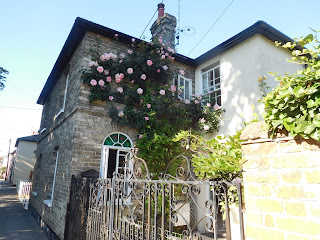
In June this year it seemed like the year of the rose.  Continuous weeks of dry weather meant that there were spectacular displays of roses around the village.


Recently, however, we have been amazed by the quantities of butterflies we have seen out on our walks. Peacocks, in greater numbers than Red Admirals, although we have seen both.

 Commas.


Ringlets


Hedge Browns and Meadow Browns


Skippers

And, most spectacular of all, Silver-washed Fritillaries, these last so energetic in flight that it is very hard to capture pictures of them at all.


Just this last week, a small, dull-looking insect turned out to be a rare Purple Hairstreak, basking on an oak sapling in the hedge.


And a brown butterfly, the female of the Common Blue.


All identifications courtesy of my husband, who turns out to be an expert.

A little charity knitting. These are small dolls using up oddments, just the right size for a child to clutch.


Saturday, June 06, 2020

Coins


One of the wonderful things about Fair Isle knitting using Shetland yarn is that you never run out of wool.  Each time you make an item you might buy a few new shades, but there will always be some to use up and even more left at the end.  Then there was that visit to the woollen mill on Shetland in 2000 - and the cones picked up on the Sales table at Spinners and Weavers and the remains of that charity shop jumper I unravelled....  so I have a large plastic box full of it.

This is Coins by Kaffe Fassett, one of those patterns which is so simple you can easily memorise it but creates a dramatic effect.  In its original form it is a cowl, knitted in the round as a tube and then joined.  I don't like knitting in the round, so I made the piece wide enough to be a scarf.  Stocking stitch has a natural tendency to curl and Shetland can be a bit scratchy, so I planned on lining it in silk.  

Choosing the colours was fun.  There needed to be enough contrast for the coin to show up.  Then the next strip along had to sit nicely with its neighbour.  I tended to alternate light and dark as the background colours.  Too dark, or worse, too light and it did not look right. After about eight stripes, I thought perhaps I could use different colours for every one.  In the end I managed this for the first half and then used a single stripe which would not be repeated before reversing the colours on the second half.  Only one stripe remained the same as the coin colour was too light for a background.  

Once finished, it was washed and pinned out flat to dry.  Then came the search for silk..  I have a large box of off-cuts from the silk mills in Sudbury, but nothing seemed quite right.  Although this is multi-colour, brown and green predominate.  So then I rifled through my wardrobe.  There was an olive green top which I no longer wear, in a smooth cotton jersey.  Just the ticket.  It took a bit of finagling to work out how best to use the pieces but at last I had it pinned to the reverse of the scarf.  I reclaimed thread from the top to complete the hand-sewing, slip-stitching the lining in place.


I love it.

I've added a picture of the lining just for you, Carol.  I used the hem of the tee shirt sleeves for each end.


Sunday, May 03, 2020

Out through the fields and the woods...

It's a particular delight this year to be able to access field paths running through woodland and open countryside.  We did meet a fair few people walking and cycling on this route, but all at a safe distance.


Leaving the village by the Tilkey road running north, we passed the little hamlet of Tilkey, once the site of brick-making.  Some of the earliest bricks made in Britain, after the Romans, were made in this little hamlet.


Along by thick hawthorn hedges and through the underpass, taking us under the 120 - predictably graffitied.


Through an area of woodland, the paths slippery after recent rain, even though the first three weeks of April were bone-dry here.


Past this house with its elaborate plasterwork and Strawberry Hill gothic windows.


The road leads on towards the Marks Hall arboretum, one of our favourite paces, now closed for the duration.  An avenue of mixed chestnut and oak leads along to where the mansion once stood.


On a regular Saturday in early May the place would be bustling with family groups, but not this year.  this view was taken through the fence around the Arboretum.  We, of course, are on the public footpath.


Land under the plough and a row of beehives at the field's edge.  We are in deep countryside here.

Then, emerging on to a lane, we follow the very muddy track through the woods and down the minor roads back to base.


Friday, April 17, 2020

The first swallow....

So, with another three weeks of lock-down ahead , we decided to vary our programme a little by driving a couple of miles to a small ancient woodland traversed by a Roman road, no less.  It's small, but big enough to get lost in.  And we saw very few people once there.

What we did see on the way was our first swallow of the year, perched high in a tree.


This year has been very dry through April so far, so all the paths are dry, unlike most years when paths like these are quagmires.. In the distance, you can you see a haze of blue.

 But soon, blue is all around: a deep intense blue, along with a heady scent.

 Wood anemones,,,

 And more bluebells, beneath these very beautiful slender trunks.


A  peacock butterfly...


And a choice of paths for returning to the car.  Not all exercise has to be of the physical kind in order to be restorative.


Monday, April 06, 2020

Virtual Walk


Most day we take our exercise by going up to the allotment and carrying on with the digging, hoeing, raking and planting.  We are still harvesting leeks and the rhubarb and white sprouting broccoli is ready to pick.

But last week we took a walk on one of the many field paths near us.  In the distance we could see joggers and cyclists on the little road running across country, but where we were we saw no one at all.  This is a green lane called Pantling's Lane and it is obviously a very ancient track.


Wild primroses grow up on each side and wild violets were even more visible a couple of weeks ago before the other vegetation started to overwhelm them.


We enjoy the birdsong on this secluded path;  skylarks far overhead, long-tailed tits in the bushes and the occasional buzzard cruising past.

The lane eventually reaches a farm, but we don't go that far.  We turn and retrace our steps.


A tiny jacket with ripple cables.  This is a 10 inch chest, so really tiny.


Monday, March 30, 2020

Life in the time of the coronavirus...

Can it really be only ten days since we were advised to stay home in order to  "squash the sombrero" and ease the pressure on the NHS?  I laughed out loud at a joke posted by one wit: "At school they told me I would not amount to anything - but here I am on my couch, drinking a glass of wine, and saving lives..."

The weekend before, we had been in full-on National Trust volunteer mode,.  I worked all day Saturday and Sunday, giving talks in the morning and serving in the coffee-shop all afternoon, nursing the huge plaster cast encasing my lower right arm.  This must have been one of the most temporary casts ever known, as by Monday I was back in a light splint, full of the joys of Spring, and shopping for left-handed scissors in Chelmsford town centre.

Later that week came the crucial briefing from the PM: we were advised to stay at home, the over-7os strongly advised to do so, and the most vulnerable to be shielded for twelve weeks. On the Friday, the schools closed.  We went to a local nursery to get seed potatoes  and were surprised to see an elderly lady in a wheelchair and a heavily pregnant woman out enjoying coffee in the café as normal.

 Meanwhile, the sun shone, the flowers bloomed and birds sang.  Inevitably, people  took a while to grasp that driving to parks, beaches and beauty spots was not acceptable.

  By Monday, of last week, we were being "Told" rather than advised to stay at home.  That lunchtime we had invited our friend who lives alone to join us for a social-distancing lunch on the patio.  She sat over six feet away and we were able to have a chat and a glass of wine, while eating a light lunch.  Where could be the harm in that?  but it will be a while before such activities can be resumed.

Now, a week in, we have settled to a routine.  Each day we get up and read the papers, following the sobering new stories from Italy and Spain.  We gather ourselves and drive up to the allotments where about four cars will already be parked.  We have planted early potatoes. onion sets, beetroot and parsnips.  We are still harvesting leeks, beetroot, and white sprouting broccoli.  Rhubarb is a real treat at this time of year.  Of course, heavy digging is not possible for me just now, but I can do planting and weeding.  This is our daily exercise.

We drive back for a sandwich lunch, eaten some days in the garden.  We have been at work here too, weeding and pruning. The guttering along the row of sheds, last painted just before our wedding in 2000, has been taken down to be spruced up.  We potter about, grateful to be out in the fresh air.

Each day, we try to catch the briefing at 5pm, marvelling at the speed at which new arrangements can be set in train. Three massive field hospitals established seemingly overnight in London, Birmingham, Manchester...  Imagery of battles, front-lines, invisible enemies is inescapable. Last week, 250,000 volunteers were requested to help in various ways.  By this week 750,000 have been recruited.  Locally, an enterprising woman has a complete support system set up, leaflets dropped through every letter-box and a team of volunteers willing to run errands for those shut in.  This week a call went out for volunteers to make hospital scrubs locally - the fabric and pattern would be delivered to those able to help.  I considered it - I once made ten pairs of white trousers for a show - but then I remembered that I can't actually use scissors at the moment, so perhaps better not.

Before the internet, this kind of lack of social interaction would have been very different. For those actually witnessing the desperately sick being trolleyed into already crowded wards it must be a day to day ordeal. For those trying to cope with children stuck at home in a flat without a garden the whole thing must be very different. And for the vulnerable, where the infection would be fatal, it must be terrifying.  But for us it is pretty much what we would have been doing anyway at this time of year, minus the shifts at Paycockes House, and more frequent visits to the Coop.  At least for now..

A little jacket, knitted with my left hand.


Tuesday, March 24, 2020

Spring Flowers...


Having a garden is proving to be a real boon as we go into lock-down.  Out there, the birds are singing as usual and the flowers are blazing away, much as they do any year.  These are annuals bought just before the big shut-down, but the flowers which delight and surprise are those which we did not plant, but which come up each year.


One year I did plant some yellow tulip bulbs.  Now these appear, often where least expected.


Primroses tend to seed themselves marching out across the lawn.


And lovely blue grape hyacinths which have been here all the thirty years that we have lived here.

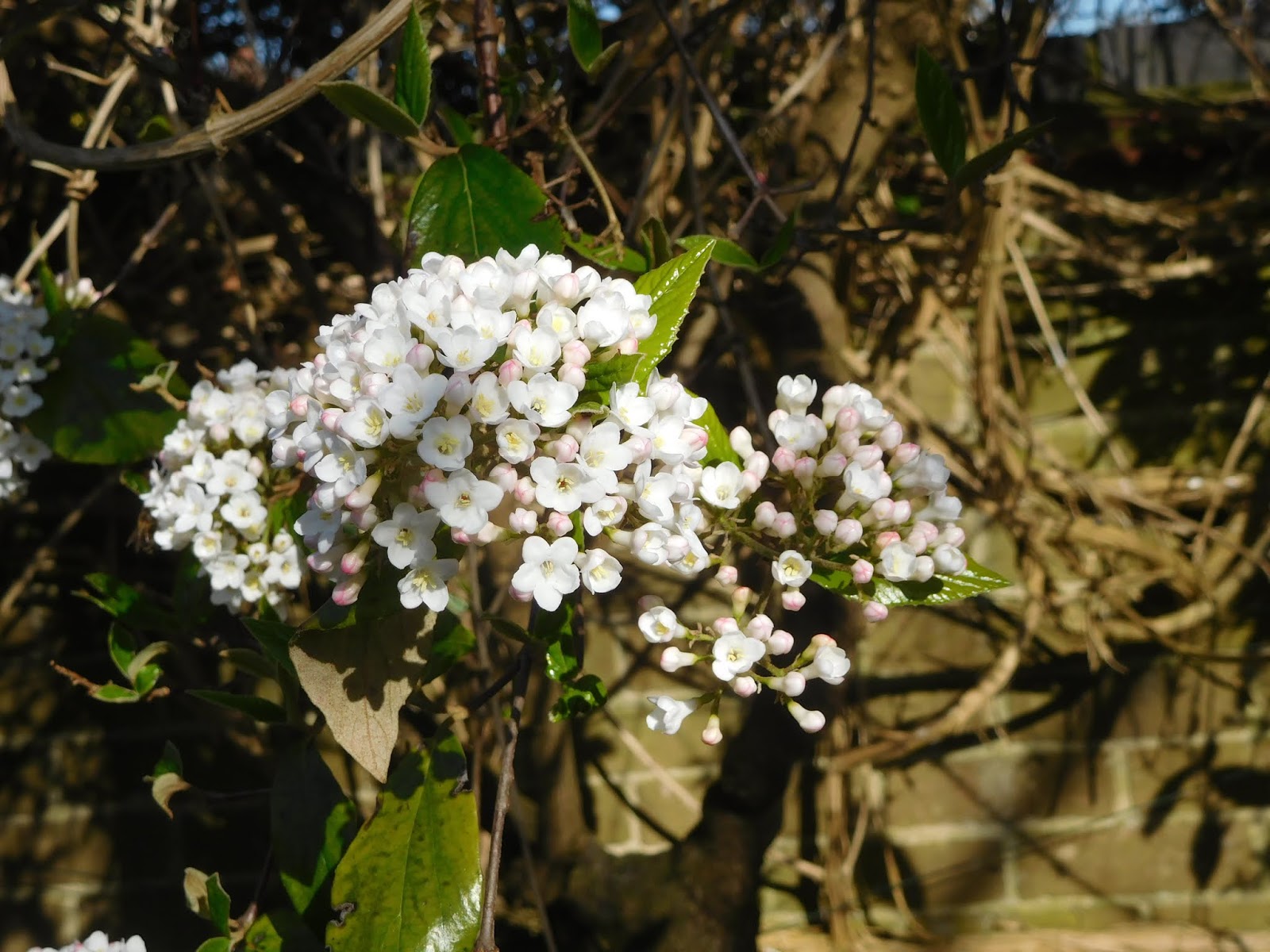
In the sunshine, pink-tipped buds on the viburnum, attracting insects even in March.


Saturday, March 21, 2020

What a palaver...

In my last post, a badly bruised wrist.  After a full two weeks, my wrist was still too weak to lift a dinner plate of food, so I took it along to the surgery to have the nurse check it out. She passed me on to the doctor, who explained to me about the scaphoid bone, the size of a cashew nut, at the base of the thumb, which was often a casualty in this kind of fall.  It has a very poor blood supply, apparently.  I needed an x-ray to check this out.

We went to the local community hospital where I had my first ever X-ray.  Very efficient.  Results would be sent to my GP urgently.  Uh, oh, I thought.

The GP rang the next morning to confirm that, although the scaphoid had escaped, there was a compression fracture of the radius.  I would need an appointment with the local Fracture clinic.  Two days later, another call: I was to go to A&E instead, as it was a 3-4 week wait for the fracture clinic.  I was wearing a light splint bought from the chemists.

At A&E, the triage nurse did suggest that after three weeks it was probably healing itself, but we went through the standard procedure of applying a large plaster cast to my lower arm, down to my knuckles.  The triage nurse began by knocking over the bucket of hot water on a wheeled stand, flooding the room..  She needed to be there as the nurse applying the plaster had not done one for five years and needed close instruction.  It was fine, but rather cumbersome.  I feared that things might get worse still once the specialist had seen it.

A&E had lived up to expectations in that, while I was waiting, a large individual had been brought in handcuffed to a somewhat smaller policeman, and with another guarding.  And this was only 10am.

I was given an appointment with the Fracture Clinic for the following Monday. Here, the orthopaedic specialist took a pair of scissors to the giant cast and sent for a light splint, on the grounds that it was probably healing already. I trotted out of that hospital feeling as if Spring had come all at once: no operation to re-set the break, no heavy cast for six weeks, just a splint, not dissimilar to the one the chemist had sold me.

And this is what left-handed knitting looks like.  It turns out that it is still possible to knit with a wrist fracture, and even with a huge plaster cast.


This is a miniature blanket for the local premature baby unit.


Tuesday, February 25, 2020

Storm force


So to Cumbria once again, for a week of walking, bird-watching and general change of scene. Those of you who enjoy seeing pictures of sunlit uplands, the light sparkling on turquoise lakes, would have been surprised by the weather this last week.  If it was not raining lightly it was raining heavily, with a gusty wind driving in from the west, slattering the rain across an already sodden landscape.  Deep pools stood at the lowest part of every field and spilled over on to roads.  To go out walking was to risk being soaked by heavy showers.

But there were the odd patches of sunlight and we tried to make the most of them.  The classic view of Criffel with grazing oyster-catchers below.


The wind-chill factor this afternoon was said to be 0 which removing a glove proved to be correct.


We did spend rather a lot of time eating out at cafes and inns.  One of our favourites up the coast is the Gin Case at Mawbray, where the picture window looks out on a sheltered orchard with bird-feeders.


Among all the blue-tits, chaffinches and tree sparrows, we were delighted to see the greater spotted woodpecker making himself at home.

Another day, a break in the clouds temped us out on to Sale Fell, one of our regular walks.  In the valley below, the flooded marshland can be seen.  


But it looked like a promising day for a walk.


We followed the grassy path up the right hand flank of the fell.  Far to the West we could see a grey cloud gathering, so we turned to retrace our steps.  As we hurried back to the car, the cloud took on a more ominous appearance, like thick fog moving at speed, driven by the stiff breeze.  It was a hailstorm.  Suddenly, my feet slid away from me on the slippery grass path and I landed on my hand. Bad mistake.  Fortunately, I had not broken anything and all my fingers were still functioning.  I had bruised it pretty badly though, and it will take a while to heal.  This is what it looks like some days later.


Never underestimate Cumbrian weather.


Friday, January 24, 2020

So the year turns


Winter blossom starting at the arboretum at Marks Hall.


Pollarded willows, showing coloured stems.

Some of the hats I have sent off to Knit for Peace.

And three pairs of fingerless mittens for the same cause.


This last for the present drawer: a simple lace scarf in a wool/silk yarn, proving how blocking makes a huge difference to lace.  The sheen on this piece shows the silk in the mix.

This week the Winter Clean at Paycocke's reached a peak.  I spent Wednesday on the annual task of scrubbing out the servery.  Bucket after bucket of hot soapy water as I worked with a scrubbing brush.  Yesterday I was in again applying polish over the same floor to feed the wood and provide what is known as a sacrificial layer.
 
It's not all hard manual labour, however.  Thursday morning was spent pulling together some notes on the historic wool trade and how our village was involved.  The notion is to make the connections between our properties in Essex and sister properties in Suffolk.

Amazing fact: In 1193, the whole of the country's woolcrop - 50,000 sacks representing the fleeces of about twelve million sheep - was confiscated to pay the ransom on Richard 1 who had been captured on his way back from the Third Crusade. "It was the sheep that paid for all", as someone said later.